Let Us Dance ° Kinematic Study of the Technological Other
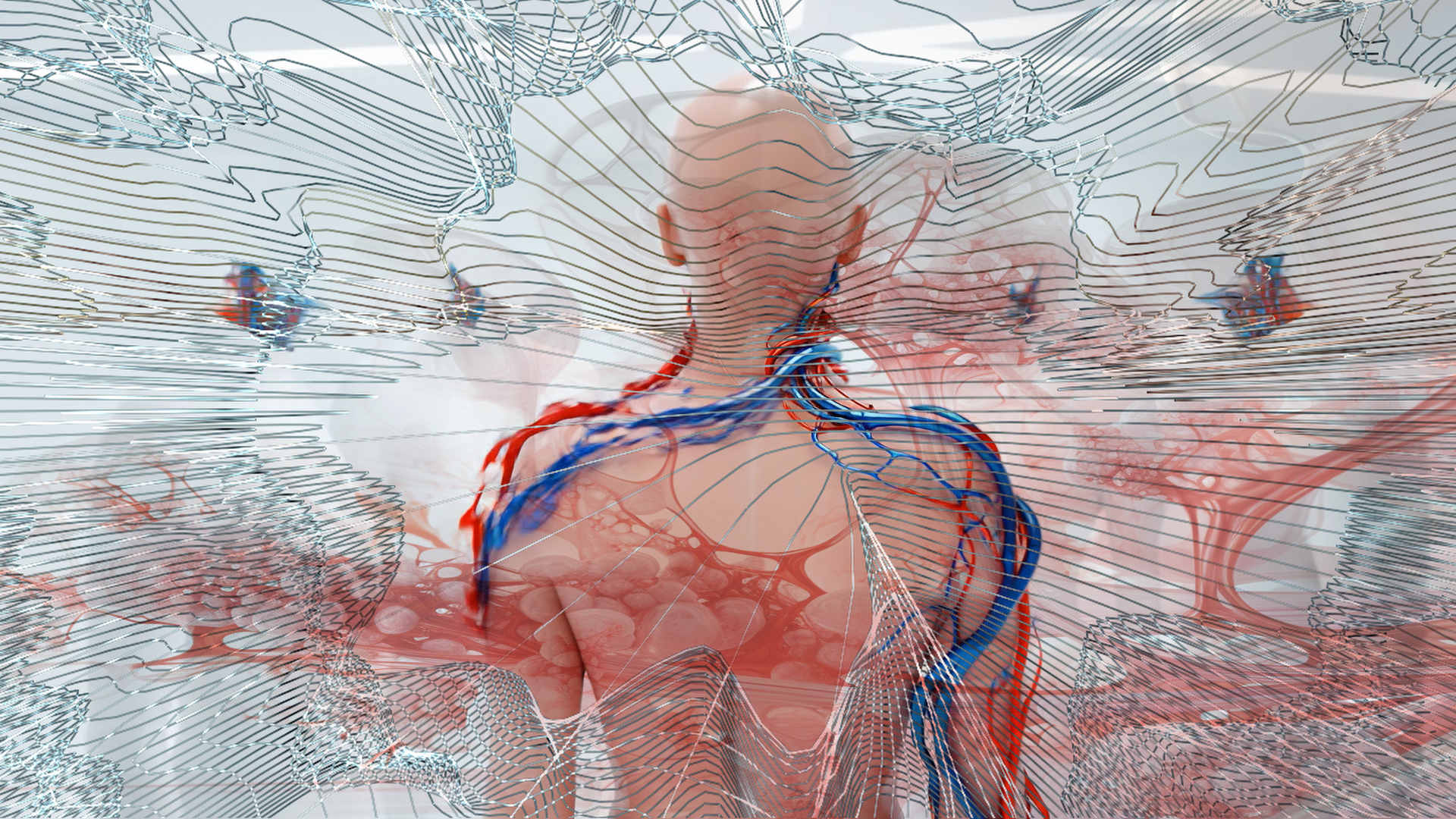
Let us dance presents the Technological Other as a process of emergence unfolding within an environment of generative images. The figures embody the potentiality of identity — transitional states between body and simulation, tissue and code, presence and transformation. Movement becomes the ontological condition of form, while the image becomes a field in which reality and hallucination coexist as equivalent modes of being.
postmedia animation, 6'13'', 2026
Download Movie FileThis postmedia animation develops the motif of the multiple portrait within the environment of generative images. Avatar-figures emerge from semi-biological, semi-synthetic structures as threshold forms — suspended between body, simulation, shadow, and data.
The work explores the passage from the image as trace toward the image as generative event. Image hallucination becomes a condition for a new ontology of visibility: the image gains the capacity for continuous reconfiguration, while form appears as a temporary condensation of relations between algorithm, perception, and bodily memory.
Within this field, the Technological Other takes shape — a process of becoming that organizes itself through movement, voice, avatar, light, and code. Its body remains fluid, layered, and open to transformation, oscillating between tissue and computational structure.
Kinematics forms the fundamental level of the work. Movement does not animate a completed form; it enables form to exist. Figures condense, dissolve, multiply, and return in successive configurations. Their dance creates an image of contemporary subjectivity: mutable, relational, open to rewriting, and yet capable of preserving its own coherence.
Let us dance does not construct a linear narrative. It functions as a field of transformation in which the biological and the technological, the real and the simulated, the corporeal and the algorithmic coexist in a state of continuous reconfiguration. It is an image of the current condition of the subject — stretched between blood and code.
Analysis of the Work
Let us dance. A Kinematic Study of the Technological Other may be read as a post-media animation exploring the formation of a synthetic body within the environment of a generative image. The work does not present the Technological Other as a ready-made figure — a robot, avatar, or digital alter ego — but rather as a process of emergence: a being arising from black, glassy, organic-mechanical matter, passing through phases of tissue, membrane, nervous system, skin, reflection, and dancing relation.
The opening sections of the film operate with an abstract, almost cosmic matter: black glossy forms, glass-like tunnels, fibres, flows, and networks that simultaneously evoke liquid, algorithm, tissue, and metal. This is significant because the body does not appear here as a point of departure. First, there is a substrate — a generative field from which the figure only later emerges. As a result, the Technological Other is not a “figure added” to the image, but an effect of the image’s own internal work.
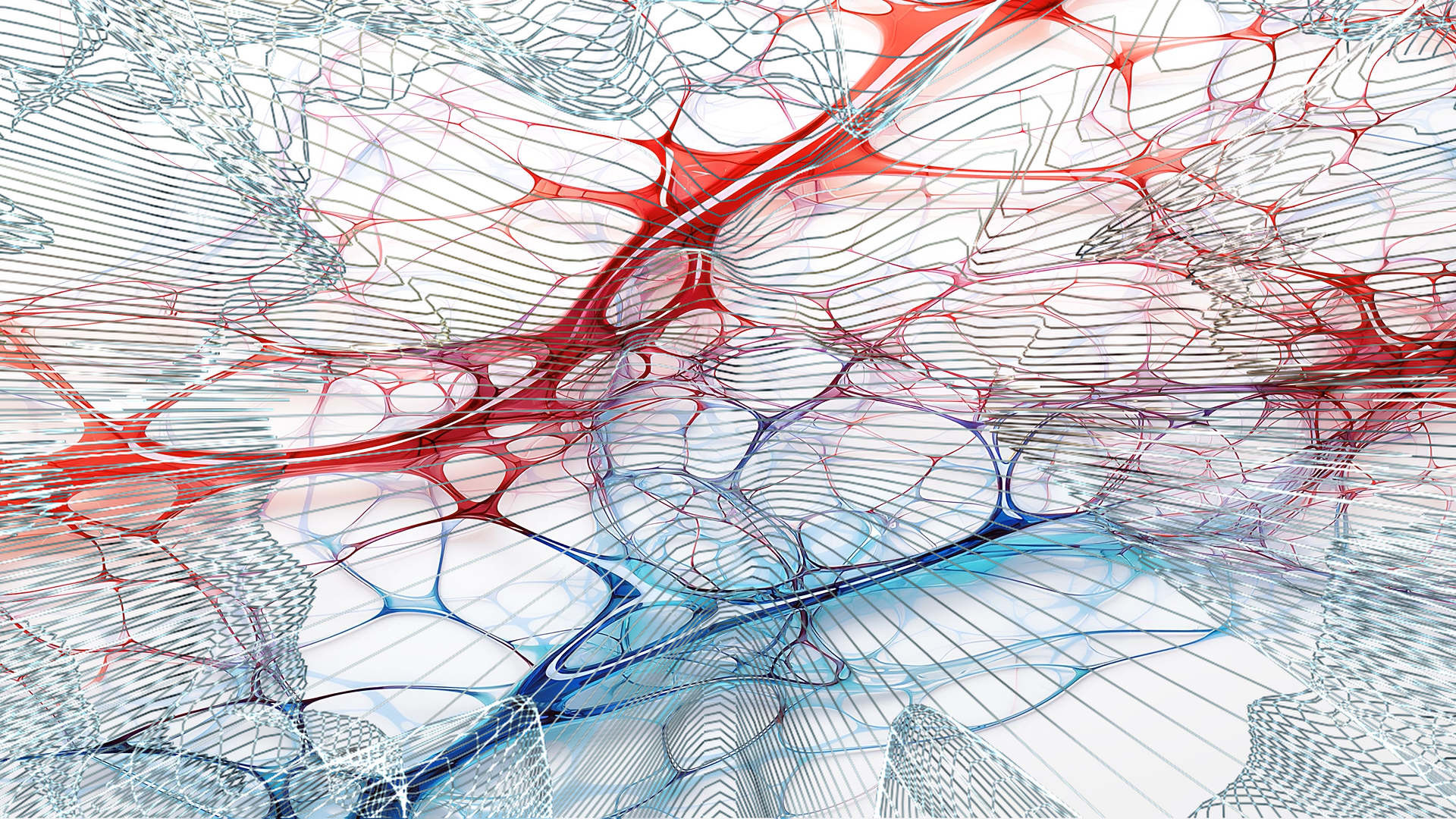
In the following section, the image begins to brighten: black matter turns into milky, pearlescent, cellular structures. The film creates the impression that we are inside an organism, or inside the simulation of an organism. White porous membranes, translucent forms, and red vascular ramifications create a space suspended between anatomy and code. Red does not function solely as a sign of blood, but as an impulse of life, circulation, and an energetic overwriting of cold whiteness.
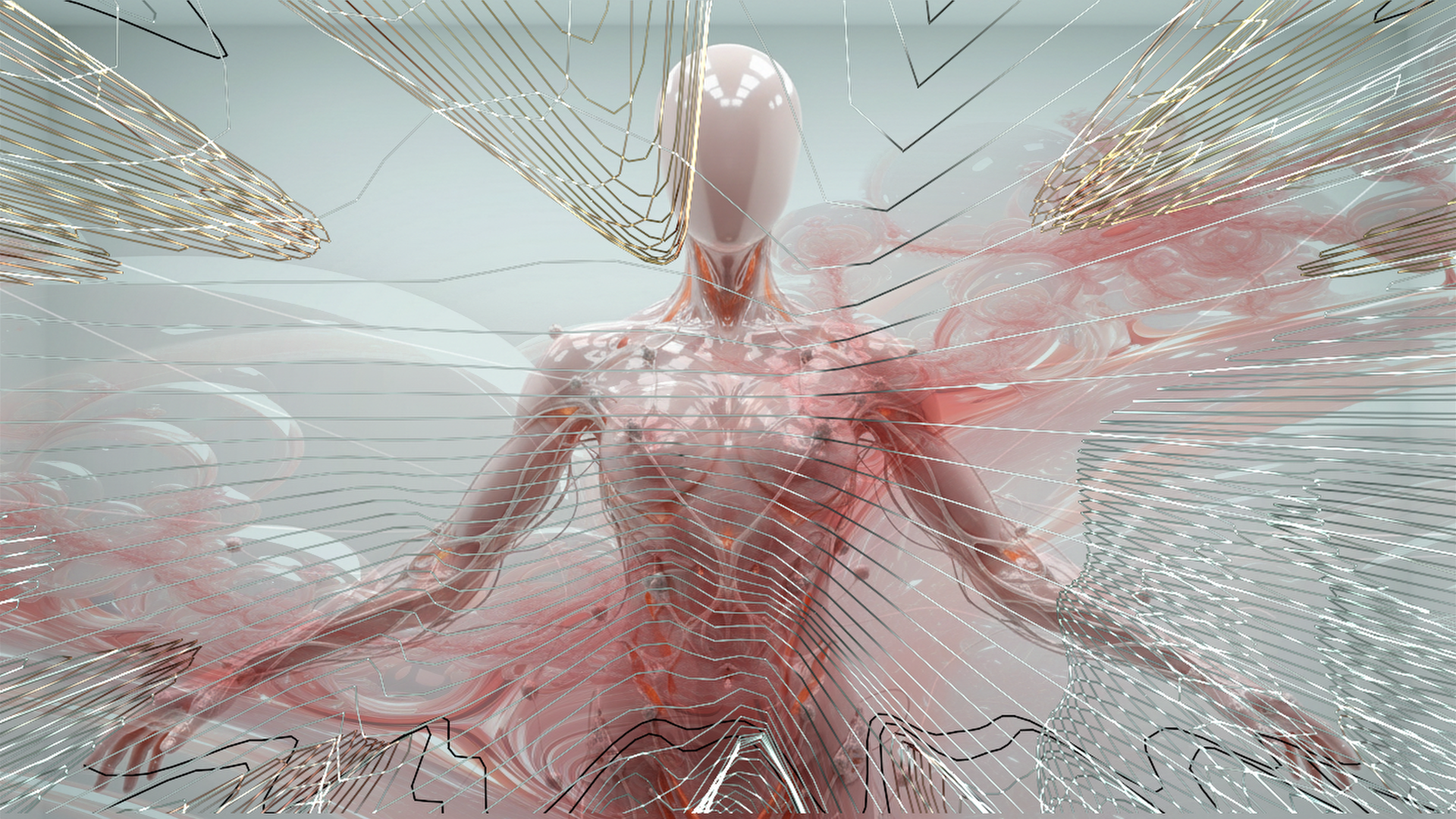
The strongest structural moment is the transition from abstract substrate to humanoid figure. The avatar, appearing in a red, semi-anatomical body, emerges as a being not yet fully stabilised: not so much a human as a temporary configuration of the body. Its surface evokes the muscular, nervous, and vascular systems, while at the same time remaining clearly synthetic. This body does not imitate biological realism. It reveals its own hybridity.
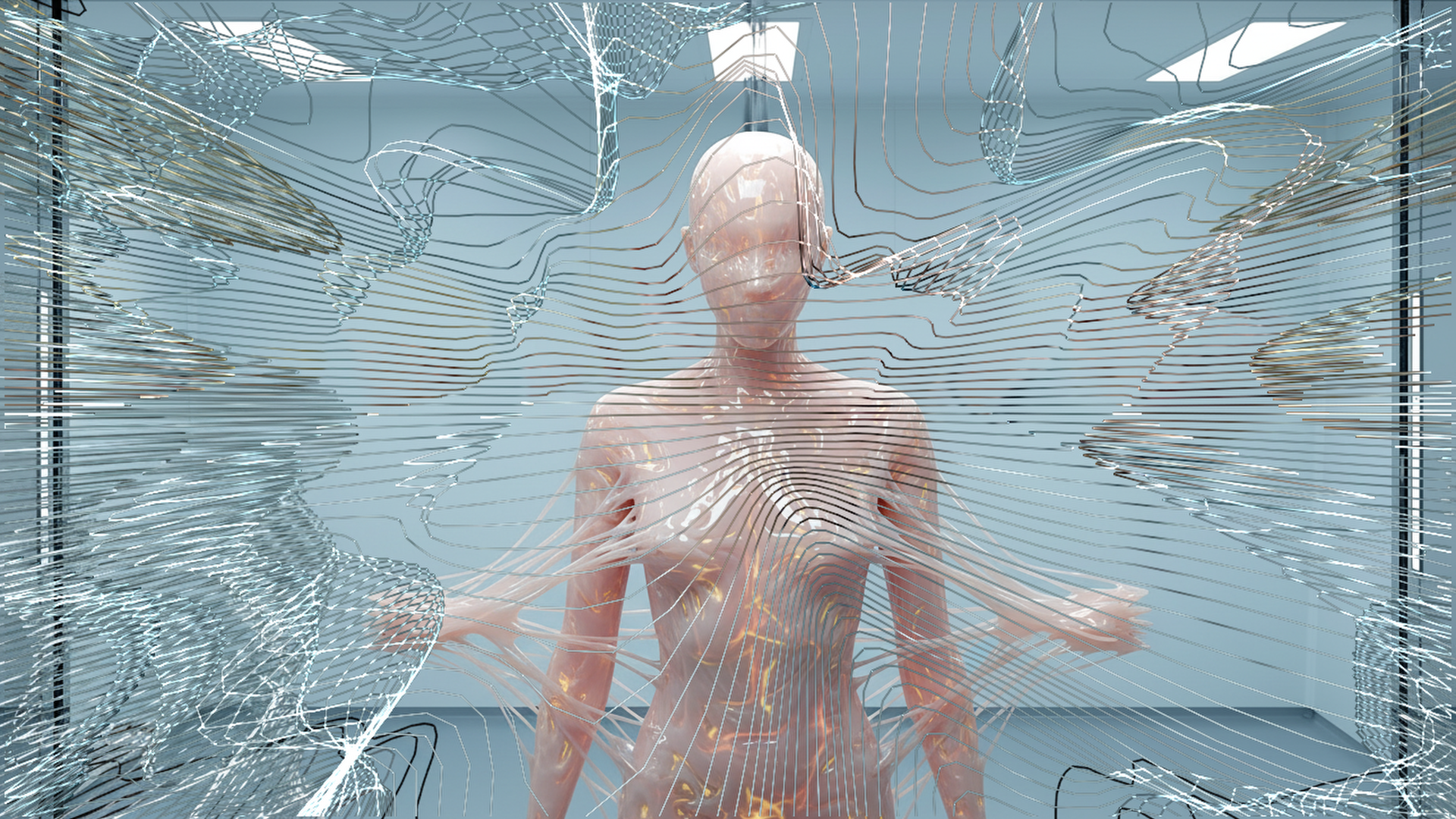
Later, the film introduces a cold, laboratory-like and mirror-like space. White, androgynous figures are positioned in relation to one another in groups, pairs, reflections, and repetitions. This is where the actual “Let us dance” begins: dance is not merely a choreography of bodies, but a model of relation between copies, variants, and doubles. The figures look at one another, repeat one another, form circles, dance in pairs, and create a kind of synthetic community. The Other ceases to be a single figure — it becomes a multiplicity.
In the final section, the material returns to abstract, silvery, white, and black structures. This is a very apt closure: the film does not end with the stabilisation of the figure or the resolution of a story. The Technological Other is once again absorbed into the matrix of the image. The structure therefore has a cyclical character: matter → figure → relation → dance → return to matter.
Justification of the Structure
The structure of the work is logical because it corresponds to the ontogenesis of a synthetic being. The film should not be more linear or literal, because its subject is not the story of a single avatar, but the conditions under which the Other appears.
Several phases may be distinguished:
Phase Function Blackness, gloss, fibres, fluid structures prefigurative state, generative field, matter of the image Whiteness, transparency, cellular structures transition from abstraction to biological organisation Redness, vessels, anatomical body the entry of tissue, life impulse, corporeality as simulation Single avatar temporary individualisation of the Technological Other Group of white figures multiplication, multiple portrait, the body as a series of variants Dance / pairs / reflections relation, synthetic community, activation of the Other through movement Return to abstraction absence of final identity, the image as a loop of transformations This justifies the subtitle A Kinematic Study of the Technological Other. “Kinematic” does not refer here only to the movement of bodies in space. It refers to movement as the basic condition for the existence of form. Everything in this work is in motion: substance, identity, gender, the boundary between tissue and code, between portrait and simulation, between figure and ornament.
.png)
Originality of the Approach
What is most interesting is that the work does not illustrate the theme of technology in a journalistic or didactic manner. It does not show machines, interfaces, screens, or dystopian science fiction. Instead, it builds the Technological Other from within the image itself. Otherness does not result from costume or prop, but from the very instability of the generative material.
The originality of the work also lies in its treatment of AI aesthetics not as an impressive tool, but as an ontological language. Typical art dealing with artificial intelligence often presents technology as an external subject. Here, technology becomes a way in which the body comes into being. Generativity is not concealed — on the contrary, its fluidity, repetitions, discontinuities, and hallucinatory quality become the very meaning of the work.
The motif of the multiple portrait is also particularly powerful. The figures are not classical protagonists, but variants of one potential being. It is not an individual who dances, but an entire system of possible bodies. Dance therefore becomes not merely an aesthetic gesture, but a protocol of relation: a way in which the Technological Other learns presence, proximity, mirror recognition, and coexistence.
Synthetic Text for Use
Let us dance. A Kinematic Study of the Technological Other is a post-media animation investigating the process by which a synthetic body emerges from the matter of the generative image. The work unfolds as a structure of transition: from black, glassy-organic forms, through milky membranes and red systems resembling tissue, to the appearance of humanoid, androgynous avatars. The Technological Other is not presented here as a ready-made figure, but as a process — an unstable configuration between body and simulation, tissue and code, presence and reflection.
The film builds its own dramaturgy through the rhythm of transformation. The abstract substrate of the image gradually organises itself into a body; the body undergoes multiplication; and multiplication turns into dance. The titular “Let us dance” does not refer merely to choreography, but to the moment in which synthetic figures enter into relation with one another. Dance becomes a protocol of recognition: a movement through which the Other begins to exist not as an individual, but as a multiplicity of reflections, variants, and possible identities.
The originality of the work lies in the fact that the theme of technology is not illustrated externally. Technology functions here as a principle that shapes image, body, and relation. Generative hallucination is not treated as an error or a side effect, but as the proper environment of existence. Let us dance presents the Technological Other as a being suspended between blood and code, matter and simulation, image and living kinetic presence.